

-
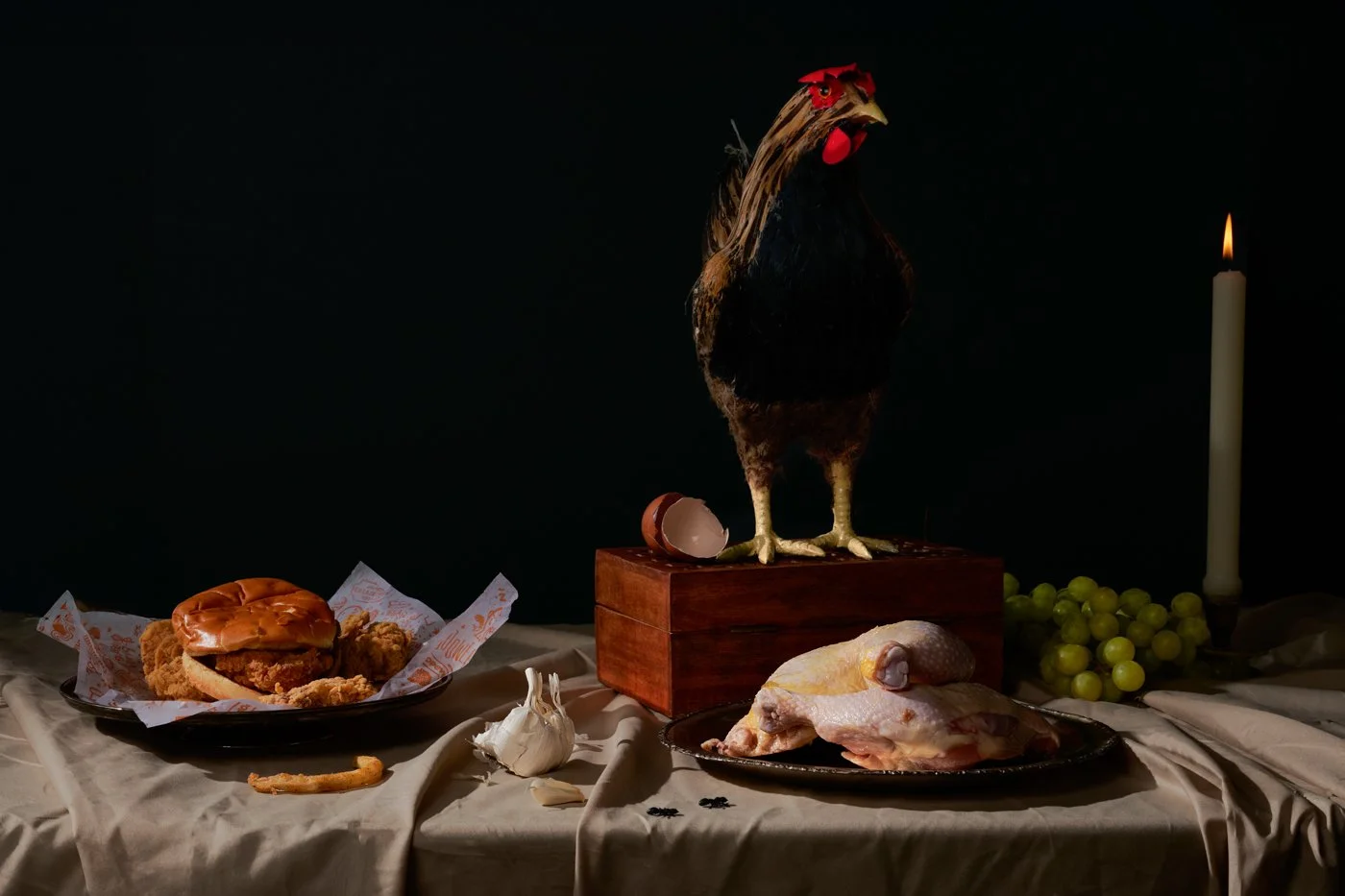
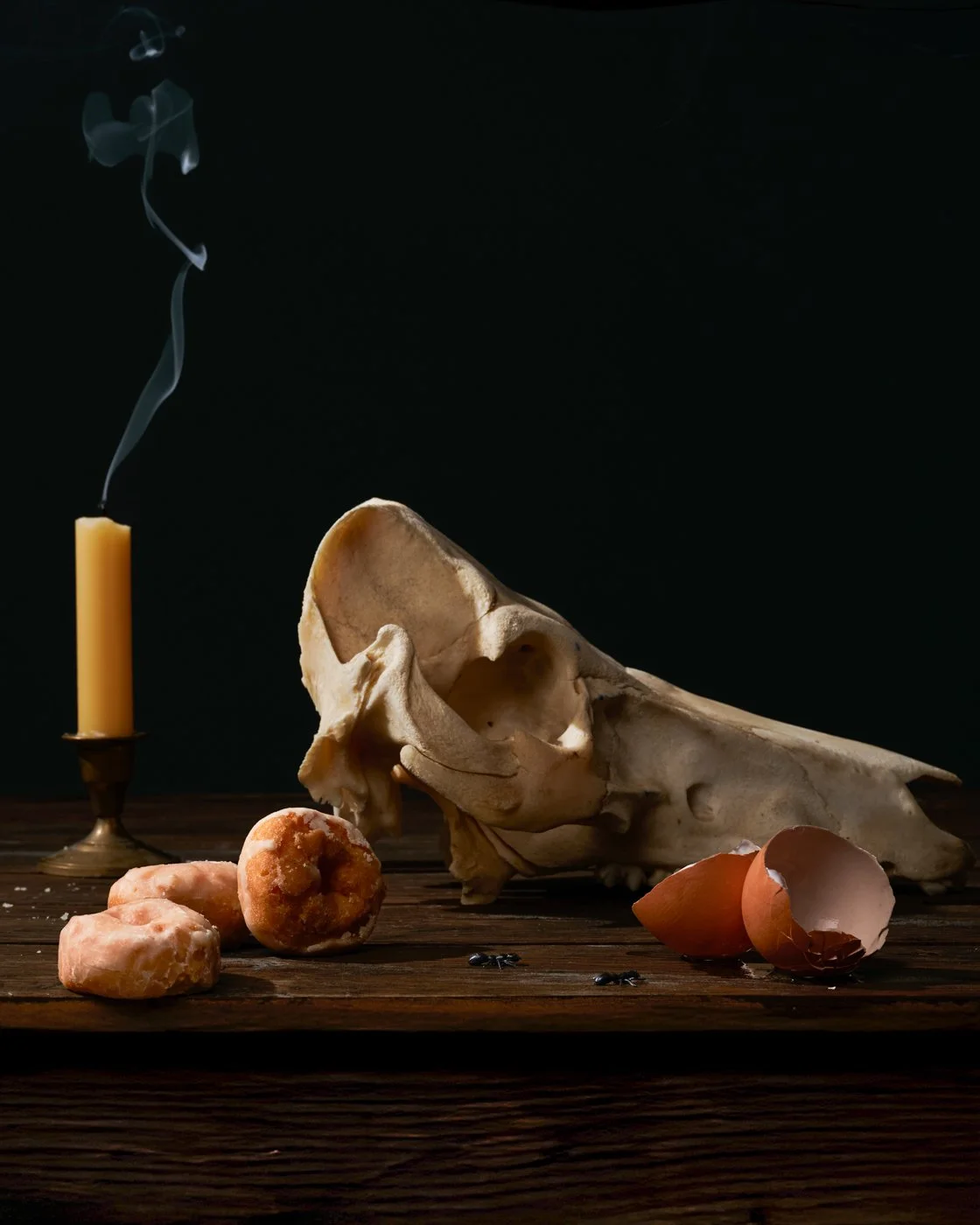
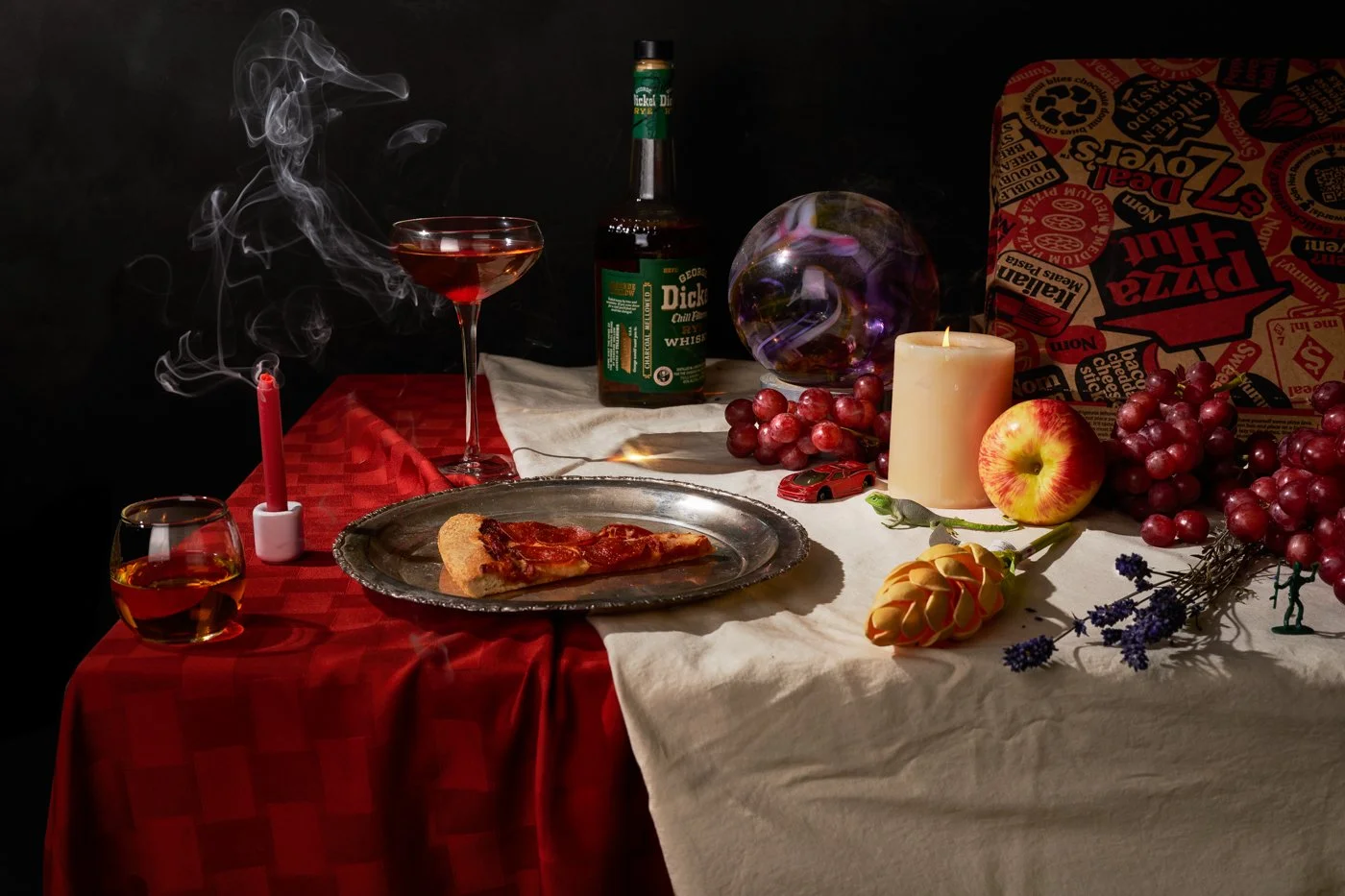
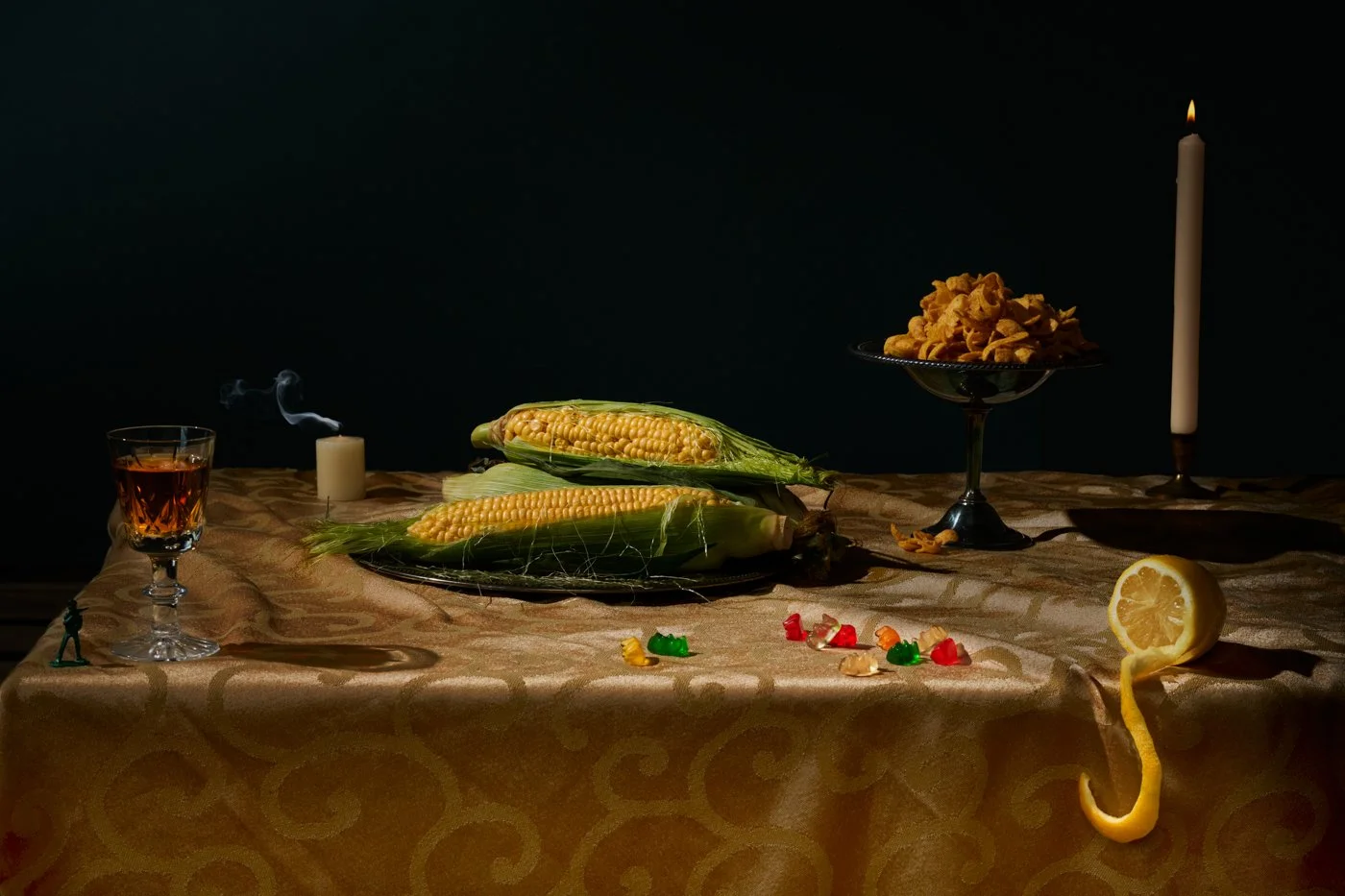
This body of work reflects on mortality, the human condition, and our culture’s obsession with materialism. Through imagery inspired by Dutch and Spanish paintings, it expresses the transience of our existence by exploring our shared relationship with food.
In the 16th and 17th centuries, artists in the Netherlands created Vanitas still-life paintings that presented objects, representing earthly possessions and consumption, as a warning to the soul. In Spain, they created similar imagery in their Bodegónes, which were paintings of traditional pantries filled with vegetables and game. These still-lifes represented the increasing role of material possessions. Food is an integral element of these traditions.
I was drawn to these paintings because their message about consumerism is even more relevant today. Mass consumption now carries not only spiritual consequences but also tangible, global ones. Industrial farming and globalization of trade have contributed to climate change. These modern realities parallel the cautionary themes of Vanitas’ art. Beyond their warnings, I’ve come to appreciate these works as meditations on the fleeting nature of existence and reflections of our shared human experience.
In my work, I explore the origins of our modern Western diet and the abundance of processed food. It’s so easy to forget its origins. I aim to create narratives of our food’s sources, exposing the beautiful and grotesque of the natural world. -
Archival Inkjet Prints